
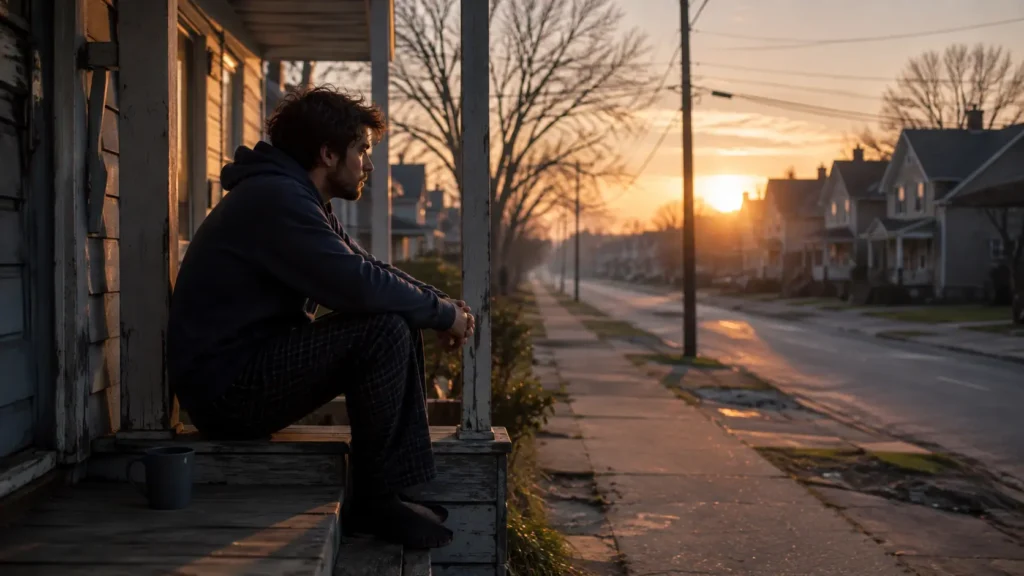

Life is hard, and that statement is not an exaggeration or a mood. It is a fact of being human that most people confirm at some point, often more than once. Bills pile up faster than paychecks arrive. Relationships strain under pressure they were never built to hold. Bodies get sick at the worst possible times. Careers stall just when momentum seemed close. None of this means something is wrong with you personally. It means you are living the same reality as everyone else, even when their version looks smoother from the outside.
This article looks at why life feels hard, what makes some stretches harder than others, and what actually helps when the weight becomes difficult to carry. The goal is not to promise that hard feelings disappear with the right mindset. The goal is to give you a clearer, more honest way to think about struggle so you can keep functioning through it.
Life Is Hard Because Growth Requires Discomfort
Nearly everything worth having costs effort, and effort is uncomfortable by definition. Learning a skill means being bad at it first. Building a career means absorbing rejection before an offer lands. Raising a family means giving up sleep, money, and personal time for years. None of these trades are optional if you want the outcome on the other side.
This is not a reason to feel worse about struggling. It is a reason to stop treating struggle as proof that you took a wrong turn. Difficulty is often the tax paid for progress, not a signal to stop. The people who look like they have it easy usually paid that tax earlier, in a season you did not see.
The Different Faces of a Hard Life
Hard rarely shows up as one clean problem. It usually stacks several pressures at once, which is part of why it feels so heavy.
1. Financial Pressure and the Weight of Bills
Money stress is one of the most common reasons life feels unbearable in the United States. Rent, groceries, insurance, and debt payments consume income faster than most budgets can absorb, especially in cities where wages have not kept pace with the cost of living. Financial pressure does not stay contained to a bank account. It follows people into their sleep, their relationships, and their ability to concentrate at work.
2. Relationship Strain and Loneliness
Marriages, friendships, and family ties take ongoing maintenance, and life often removes the time needed for that maintenance. Work schedules, parenting demands, and physical distance from loved ones can turn once-close relationships into occasional check-ins. Loneliness compounds every other hardship because it removes the people who would otherwise help carry the load. Rebuilding that support looks different for everyone, but it usually starts with building more calm into daily life in small, repeatable ways.
3. Health Struggles That Drain Energy
Chronic pain, illness, and untreated mental health symptoms make ordinary tasks exhausting. A body that is fighting itself has less capacity left for work, parenting, or problem-solving. Health struggles are also invisible to outsiders, which means people carrying them often get less sympathy than the difficulty deserves.
4. Career Setbacks and Uncertainty
Layoffs, stalled promotions, and industries that shift overnight leave many people questioning decades of career planning. A single setback can undo years of stability, and rebuilding from that point takes real time, not a quick pivot.
Why It Feels Harder Now Than It Used To
Several forces have made day-to-day life more demanding over the past two decades. Housing and healthcare costs have risen faster than typical income growth, so the same effort buys less stability than it used to. Constant connectivity through phones and social media means comparison never really stops, and it is easy to measure your hardest days against someone else’s highlight reel. Work has also become less predictable, with more people juggling contract gigs, shifting schedules, or side income just to stay afloat.
None of this is meant to sound hopeless. Understanding why life feels heavier helps you stop blaming yourself for a difficulty that has structural causes, not just personal ones.

The pace of daily life has also changed the way stress accumulates. Notifications, emails, and group chats keep low-level demands running around the clock, so the mind rarely gets a full break, even outside of work hours. Downtime used to mean actual disconnection. Now it often means the same devices that create stress are also the ones people reach for to relax, which blurs the line between rest and more input. Over time, that constant low hum of demand adds up to the same exhaustion as one large crisis, just spread out across every day instead of concentrated into a single event.
Family structures have shifted as well. Many households run without the extended support that used to be closer at hand, like grandparents nearby to help with childcare or neighbors who checked in regularly. That means the same responsibilities that used to be shared across a wider group now land on fewer shoulders, often just one or two adults managing work, children, aging parents, and a household at the same time.
What Psychology Says About Struggle and Resilience
The people who cope best with hardship are not the ones who feel the least stress. They are the ones who keep a sense of agency, meaning they believe their actions still matter even when circumstances are difficult. This belief does not need to be large or dramatic. It can be as simple as choosing what to eat, sticking to a small routine, or deciding to reach out to one person for support.
Resilience is also not a fixed trait some people have, and others lack. It is built through repeated exposure to manageable difficulty, followed by recovery. Every hard season you get through, even imperfectly, adds to a track record you can draw on the next time things get difficult.
There is also a real difference between problem-focused coping and emotion-focused coping, and both have a place depending on the situation. Problem-focused coping means taking direct action on something you can change, like updating a resume after a layoff. Emotion-focused coping means managing your reaction to something you cannot change, like accepting a diagnosis while still grieving what it means for your plans. People who struggle most with hard seasons often try to force problem-focused solutions onto situations that actually call for emotional processing first, leaving them feeling like they are failing to fix something that was never fixable in the first place.
Self-compassion plays a bigger role in recovery than most people expect. Speaking to yourself the way you would speak to a friend going through the same struggle, rather than criticizing yourself for not coping perfectly, tends to shorten how long the heaviest part of a hard season lasts. Harsh self-talk adds a second layer of suffering on top of the original hardship, and removing that layer, even partially, frees up energy that can go toward actually solving problems.
Practical Ways to Cope When Life Feels Too Hard
Coping does not mean pretending things are fine. It means finding specific, repeatable actions that keep you functional while the hard period runs its course.
1. Break Problems Into Smaller Pieces
A wall of problems feels impossible to move. A single, specific task feels doable. If money is the issue, the next right step might just be listing every bill in one place, not solving the entire budget in one sitting. If a relationship is strained, the next step might be one honest conversation, not a full repair plan. Small, concrete actions rebuild a sense of control faster than trying to solve everything at once.
2. Build a Support System You Can Lean On
People who talk openly about hard seasons tend to recover faster than people who isolate. Support does not have to come from professional therapy, although that can help. It can come from a friend who checks in weekly, a family member who listens without judgment, or a support group built around a shared struggle, like grief, addiction recovery, or financial hardship. Asking for help is not a weakness. It is one of the most efficient ways to lighten a load that was never meant to be carried alone.
3. Protect Your Basic Routines
Sleep, food, and movement are the first things people drop during hard seasons, and they are also the things that make everything else harder when they slip. Even a rough version of a normal routine- going to bed at a consistent time, eating regular meals, and getting outside for a short walk- keeps your body capable of handling stress instead of adding to it.
4. Separate What You Can Control From What You Cannot
Some parts of a hard situation are within your influence. Others are not. A layoff is not something you controlled, but your job search strategy is. A diagnosis is not something you chose, but your treatment plan and daily habits are. Spending energy on the controllable pieces, instead of replaying the uncontrollable ones, is one of the most reliable ways to reduce the feeling of being stuck.
When Hard Becomes Too Hard: Recognizing the Warning Signs
There is a difference between a genuinely difficult season and a level of struggle that needs outside support. Warning signs include persistent hopelessness, losing interest in things that used to matter, withdrawing from everyone around you, or noticeable changes in sleep and appetite that last for weeks. If any of this sounds familiar, talking to a doctor or licensed therapist is a reasonable next step, not an overreaction. Primary care doctors can also screen for underlying health issues that make emotional struggles heavier than they need to be.

Reaching out early, before a hard season turns into a crisis, tends to lead to faster and steadier recovery than waiting until things feel unmanageable.
Finding Meaning on the Other Side of Hard
Most people who look back on their hardest years describe them differently once distance is added. The season that felt unbearable often becomes the one that taught the most, built the closest relationships, or led to a decision that changed everything for the better. This does not make the hard season pleasant while it is happening, and no one should have to pretend it was. It does mean that hard is not the same as pointless.

Life is hard for real, structural reasons, and it will likely be hard again at some point, no matter how well you plan. What changes over time is not whether difficulty shows up. What changes is how equipped you become to move through it, one manageable step at a time.