


Most career advice for introverts stops at “find a quiet job.” That advice misses the point. The careers for introverts that actually work well are not defined by silence. They are defined by how much control you get over your own focus, your schedule, and the pace of interaction with other people.
An open-plan office can be just as draining as a sales floor if you have no say over when you’re interrupted. A customer-facing job can suit an introvert perfectly well if the conversations are short, predictable, and spaced out. The goal is not to avoid people. The goal is to avoid unstructured, constant, high-stimulation contact that leaves you depleted by 2 p.m.
This guide breaks down which careers genuinely fit that need, which jobs only look introvert friendly on paper, and how to manage the parts of any career that will require you to speak up anyway.
What Actually Makes a Job Introvert Friendly
Three factors matter more than noise level or headcount.
The first is autonomy. Jobs that let you decide when to check messages, when to take a break, and how to structure your day protect your energy far better than jobs with constant real-time demands.
The second is the shape of your interactions. Introverts generally do fine with deep one-on-one conversations or small, familiar teams. What drains most introverts is large-group interaction with people they don’t know well, especially when it happens without warning.
The third is recovery time. A job with two hours of client calls followed by four hours of solo work is very different from a job with the same two hours of calls scattered randomly through an eight-hour day. Predictability lets you plan your energy instead of constantly reacting.
Are You an Introvert or Just Shy?
These get confused often enough that it’s worth separating them, because the advice differs.
Shyness is anxiety about social judgment. A shy person may want more social contact but feel nervous approaching it. An introvert, by contrast, may feel completely comfortable in social situations and still find them tiring. The distinction matters because a shy extrovert needs confidence-building work, while a true introvert needs energy management, not exposure therapy.
Many people are a mix of both, and some people who identify as introverts are actually highly sensitive to stimulation of any kind, including noise, bright light, or a packed schedule. If that describes you, look for roles with quiet physical environments, not just fewer meetings.
The Best Careers for Introverts, by Type of Work
1: Careers for Introverts Who Like Technology
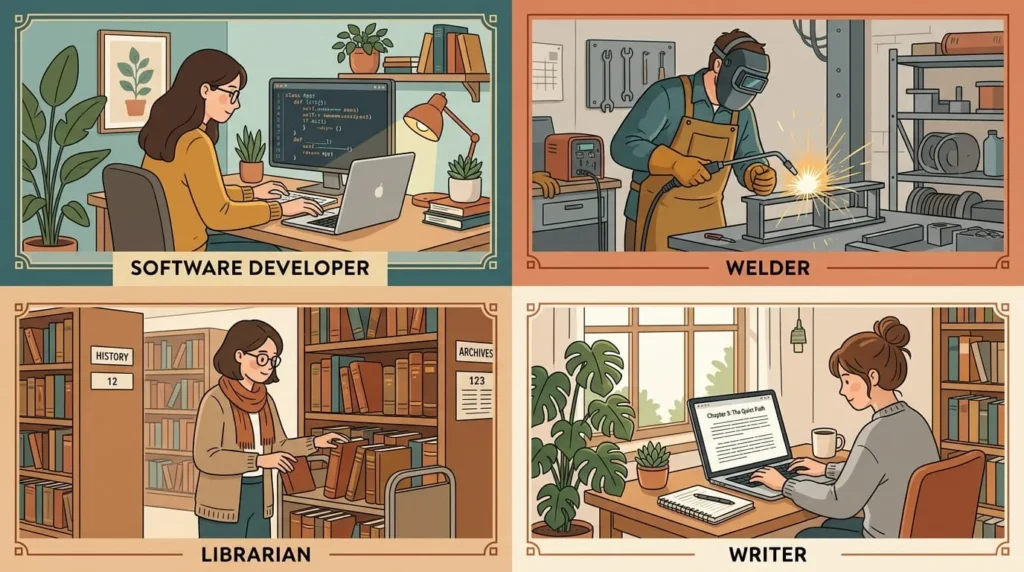
Software development remains one of the most consistently strong fits, since most of the actual work happens alone or in small, focused pairs. Data analysis and data science follow a similar pattern, with long stretches spent working through problems before presenting a summary of conclusions rather than defending them in real time. Cybersecurity analysis, IT systems administration, and database administration all offer similar independence, along with clear, well-defined problems to solve.
2: Careers for Introverts Who Like Writing and Creative Work
Technical writing, copywriting, and editing suit introverts who process ideas better in writing than out loud. Graphic design and UX design involve some client collaboration, but the bulk of the work is solitary, and feedback tends to arrive in scheduled reviews rather than constant interruptions. Video editing and photography also fit well, since you can work through the technical stages alone even when the shoot itself involves people.
3: Careers for Introverts Who Like Numbers and Research
Actuarial work, accounting, and financial analysis reward careful, independent thinking over quick verbal persuasion. Academic and industry research roles, from lab science to market research analysis, tend to involve long project cycles with occasional presentations rather than daily group work. Archivists and librarians get less attention in these lists, but the role increasingly blends research, cataloging, and quiet reference work with only brief patron interactions.
4: Careers for Introverts Who Like Working With Their Hands
Skilled trades get overlooked in most introvert career lists, which is a real gap. Welding, machining, electrical work, and carpentry all involve long periods of focused, independent work with clear physical results. These trades also offer something office-based introvert jobs often lack: a defined end to the workday and minimal after-hours communication.
5: Careers for Introverts Who Still Want to Help People
Not every introvert wants to avoid people entirely. Occupational therapy, physical therapy, and counseling all involve one-on-one work with a single person at a time, which is a very different energy cost than managing a classroom or a sales team. Veterinary technician roles combine hands-on animal care with limited human small talk, which many introverts find genuinely restorative rather than draining.
Jobs That Look Introvert Friendly But Often Aren’t
Some roles get recommended constantly for introverts without actually fitting the energy pattern described above.
Real estate and insurance sales are often pitched as “flexible, independent” work, but income depends on constant cold outreach and unpredictable client contact, which is closer to extrovert territory. Remote customer service can be worse for introverts than in-person retail, since call volume is often back to back with no recovery time between conversations. Many entry-level marketing and social media roles also involve far more meetings and stakeholder management than the job title suggests.
Before taking a job because it’s labeled “great for introverts” on a list like this one, ask what a typical Tuesday actually looks like. Unstructured contact with strangers, whether by phone, chat, or in person, is the pattern to watch for, regardless of the job title.
How to Handle the Parts of Your Job That Require Extroversion
Even the best-fitting careers for introverts will include some meetings, presentations, or client contact. A few practical habits make that manageable.
Batch your meetings into one or two blocks instead of scattering them across the day, which preserves longer stretches of uninterrupted focus time. Prepare talking points in advance for recurring conversations like status updates or client check-ins, since improvising in real time is what tends to drain introverts fastest. Build in recovery time after high-interaction events, even something as small as ten quiet minutes after a group call, rather than moving straight into the next task.

If your role allows it, ask for meeting agendas ahead of time. Knowing the topic and your role in the conversation reduces the on-the-spot pressure that makes group discussions exhausting.
How to Talk About Being an Introvert in a Job Interview
You don’t need to disclose that you’re an introvert to explain how you work best. Frame it around your working style instead. Saying you do your best problem-solving with focused, independent time, and that you prepare thoroughly before meetings, signals reliability rather than a limitation.
It also helps to ask specific questions during the interview about daily structure. How many meetings does the role typically involve per week? Is the team remote, hybrid, or in-office? Is there a quiet space to work when deep focus is needed? The answers will tell you more about fit than the job title ever will.
Finding Work That Fits Your Energy, Not Just Your Skills
The strongest careers for introverts share a common thread: they give you control over your focus and your interactions instead of demanding constant, unscripted availability. That thread matters more than industry, salary, or job title.

Use the categories above as a starting point, but evaluate any specific opening against the three factors that matter most: autonomy, the shape of your interactions, and whether you get real recovery time. A role that respects all three will serve you far better than one chosen only because it’s labeled quiet.